Free trial class

Commerce tuition in Gurugram · Class 11–12

Commerce tuition in Gurugram, with economics that makes sense

Commerce in Classes 11 and 12 means two very different subjects: economics, which is about reasoning and graphs, and accountancy, which is about logic and accuracy. Each has its own specialist teacher at Inspire Academics, and both are taught concept-first.

The real problem

Why economics answers lose marks

Economics answers often go wrong because students write what they remember instead of reasoning through the question. A demand question needs a cause, an effect and a graph that shows both, and that only comes from understanding how the model works.

We teach every economic idea as a story about real choices: a family deciding what to buy, a firm deciding how much to produce, a government deciding what to spend. Graphs are drawn by students in class until they can draw and explain them without a prompt.

Concept first

Four economics concepts we teach through real life

Demand and the law of demand

The usual wayThe law is memorised along with a list of exceptions.

How we teach itStudents build a demand schedule from their own choices, for example how many samosas they would buy at different prices, and plot it. Shifts and movements become obvious.

Consumer equilibrium

The usual wayUtility analysis feels abstract and mathematical.

How we teach itWe use pocket money and a shopping list to show why a student stops buying more of something, then connect it to marginal utility.

National income

The usual wayThree methods of calculation are memorised as formulas.

How we teach itWe follow money through a small imaginary economy so students see why production, income and expenditure all arrive at the same total.

Money and banking

The usual wayCredit creation is taught as a formula.

How we teach itStudents play the role of a bank and its customers in class, lending and re-depositing, and watch deposits multiply before they meet the formula.
Syllabus

Commerce syllabus we cover

Class 11 Economics

  • Statistics for economics: collection, organisation and presentation of data
  • Measures of central tendency and correlation
  • Index numbers
  • Introduction to microeconomics
  • Consumer equilibrium and demand
  • Producer behaviour and supply
  • Forms of market and price determination

Class 12 Economics

  • National income and related aggregates
  • Money and banking
  • Determination of income and employment
  • Government budget and the economy
  • Balance of payments
  • Indian economic development

Accountancy (Class 11–12)

  • Journal, ledger and trial balance
  • Financial statements
  • Partnership accounts
  • Company accounts
  • Analysis of financial statements
  • Cash flow statement
  • Full details on our accounts tuition page

How a class runs

One topic, five steps: price elasticity of demand

1

Ask why

why does a petrol price rise barely change how much people buy, but a rise in chocolate prices does?

2

See it

two demand curves, one steep and one flat, drawn side by side.

3

Build it

students calculate elasticity from their own demand schedules.

4

Use it

necessities, luxuries and substitutes, then board questions with numerical elasticity.

5

Teach it back

each student explains elasticity using one product they buy.

Take a 2-minute break · Class 11–12 commerce game

Play: Debit or Credit? 10-card challenge

Free on our Concept Lab. No sign-up, no marks, just the “aha!”

Play now →
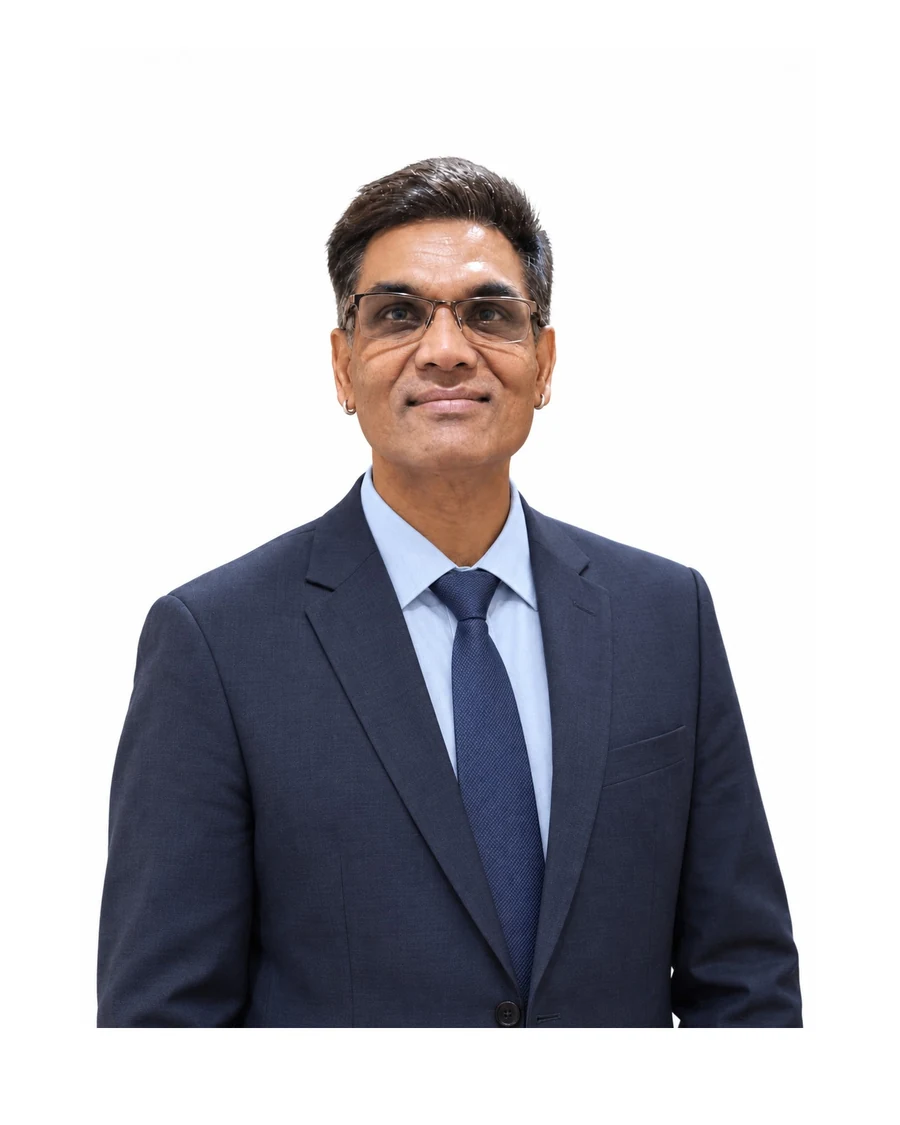
Dr. Ram Sharma, founder of Inspire Academics

Who teaches your child

A specialist for every subject, led by Dr. Ram Sharma.

Ph.D. and M.Tech in Electronics & Communication Engineering, former General Manager at Reliance Communications, teaching in Gurugram since 2014. Parents speak to him directly.

  1. 12students per batch at most, so every student is asked, checked and corrected in class.
  2. 5steps for every chapter: ask why, see it, build it, use it, teach it back.
  3. 1written note to parents every week on which concepts are clear and which need more time.

Parents ask us

Commerce tuition: frequently asked questions

Which commerce subjects do you teach?

Economics and Accountancy for Class 11 and 12, each with its own specialist teacher.

Do you teach both microeconomics and macroeconomics?

Yes. Class 11 covers statistics for economics and microeconomics, and Class 12 covers macroeconomics and Indian economic development.

How do you help with economics diagrams and long answers?

Students draw every graph themselves in class and learn to structure answers as cause, effect and diagram. We practise board-style long answers regularly.

Is there help for students who chose commerce with maths?

Yes. Maths for Class 11 and 12 is taught by our maths specialist, and we can plan a timetable that fits commerce and maths together.

Do you prepare students for CA Foundation?

CA Foundation entrance preparation is run by our sister institute, Future Makers, at the same centres.

Can my child take only economics?

Yes. Students can join for economics, accountancy or both.

More questions about batches, centres and admissions are answered on our parents' FAQ page.

Admissions open · 2027–28

Try a class free. Decide after.

Fill this in and the form opens WhatsApp with your details ready to send. Our team will call you back to fix a trial class at your nearest centre.

Or call: +91 96545 02028