Free trial class

Biology tuition in Gurugram · Classes 9–12

Biology tuition in Gurugram built on processes, not just terms

Biology has a lot of vocabulary, but the marks and the understanding come from knowing how processes work: how water reaches a leaf, how a trait passes from parent to child, how a nerve signal travels. We teach the process first and the terms follow naturally.

The real problem

Why biology is more than memorising

Many students try to learn biology by reading the chapter again and again. They remember the words but cannot explain a process in order, label a diagram they have not seen before, or answer a question that applies the idea to a new situation.

We teach biology as a set of connected systems. Each process is drawn step by step, students explain it back in their own words, and diagrams are practised until they can be drawn from memory with correct labels.

Concept first

Four biology topics we make clear

Diffusion and osmosis

The usual wayDefinitions are memorised and the two are often confused.

How we teach itThe potato strip experiment in class shows water moving in and out. Students predict the result first, then explain it, so the difference sticks.

Transport in plants

The usual wayXylem, phloem and transpiration are learnt as separate facts.

How we teach itWe follow a single water molecule from soil to leaf and out as vapour. Root pressure, capillarity and transpiration pull become one connected story.

Heredity and genetics

The usual wayMendel's ratios are memorised without understanding where they come from.

How we teach itStudents cross pea plants on paper with Punnett squares, find the 3:1 ratio themselves, and then use it to explain why siblings look different.

Human physiology

The usual wayOrgan systems are studied in isolation.

How we teach itWe link systems through everyday events: what happens in your body when you run, eat or touch something hot. Each system is shown as part of the whole.

Syllabus

Biology syllabus we cover

Classes 9–10 (Science)

  • The fundamental unit of life
  • Tissues
  • Improvement in food resources
  • Life processes
  • Control and coordination
  • How do organisms reproduce?
  • Heredity
  • Our environment

Class 11

  • Diversity in the living world
  • Structural organisation in plants and animals
  • Cell structure and function
  • Plant physiology
  • Human physiology

Class 12

  • Reproduction in flowering plants and humans
  • Reproductive health
  • Principles of inheritance and variation
  • Molecular basis of inheritance
  • Evolution
  • Human health and disease
  • Microbes in human welfare
  • Biotechnology: principles and applications
  • Organisms, populations and ecosystems
  • Biodiversity and conservation

How a class runs

One topic, five steps: what exactly is a gene?

1

Ask why

why does a child have her father's eyes but her mother's curly hair?

2

See it

a simple model from chromosome to DNA to gene.

3

Build it

students work through a Punnett square to predict offspring traits.

4

Use it

dominant and recessive traits, then board questions on monohybrid and dihybrid crosses.

5

Teach it back

each student explains one inherited trait in their family.

From our students

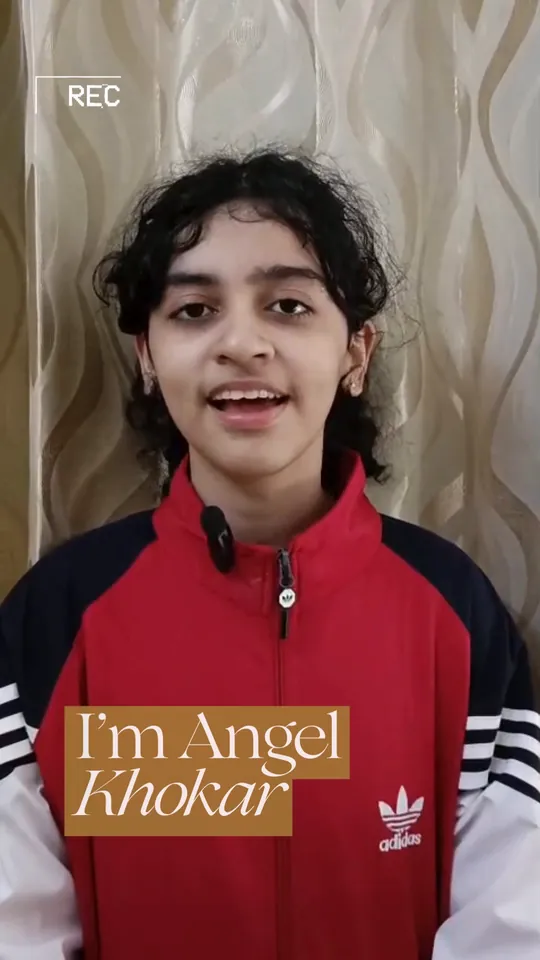
Angel Khokhar
Science · Class 10

Angel Khokhar

Says steady, regular work in class made her more disciplined and consistent.

Watch the video ↗

Take a 2-minute break · Class 9–10 science games

Play: Litmus Detective and Glow the Bulb

Free on our Concept Lab. No sign-up, no marks, just the “aha!”

Play now →
Dr. Ram Sharma, founder of Inspire Academics

Who teaches your child

A specialist for every subject, led by Dr. Ram Sharma.

Ph.D. and M.Tech in Electronics & Communication Engineering, former General Manager at Reliance Communications, teaching in Gurugram since 2014. Parents speak to him directly.

  1. 12students per batch at most, so every student is asked, checked and corrected in class.
  2. 5steps for every chapter: ask why, see it, build it, use it, teach it back.
  3. 1written note to parents every week on which concepts are clear and which need more time.

Parents ask us

Biology tuition: frequently asked questions

Which biology classes do you teach?

Biology for Classes 11 and 12, and the biology chapters of Class 9 and 10 science, for CBSE, ICSE and IB students.

How do you help students with diagrams?

Diagrams are drawn step by step in class, then practised regularly until students can draw and label them from memory. We also practise unseen diagram questions.

Do you prepare students for NEET?

Inspire Academics focuses on school and board biology, which forms the base for any entrance preparation. Speak to us about your child's goals during the trial class.

Is NCERT enough for biology boards?

For CBSE, NCERT is the core, and we make sure every line of it is understood, not just read. We add practice questions to test application.

How big are biology batches?

At most 12 students per batch.

Can my child join online?

Yes. Students can attend the live class online, and one-to-one sessions are possible on request.

More questions about batches, centres and admissions are answered on our parents' FAQ page.

Admissions open · 2027–28

Try a class free. Decide after.

Fill this in and the form opens WhatsApp with your details ready to send. Our team will call you back to fix a trial class at your nearest centre.

Or call: +91 96545 02028